
Read by Topics:
Featured • September 4, 2026
Let’s create the Beauty Olympics
There’s a global cosmetics regulator. It has met twenty times. Ask any indie founder you know if they’ve heard of it. It’s called ICCR, the International Cooperation on Cosmetics Regulation. Regulators from Brazil, Canada, the EU, Japan, Korea, the UK, the US and a few others have been meeting once a year since 2007. The twentieth meeting was in Tokyo this July. ANVISA sits at that table. So does Health Canada. Nineteen years of harmonization talks, and a small brand still can’t ship the same cream to four markets with one file. I bring it up because every few months continue reading ->
Diego Lapetina • 5 minutes

Cosmetics • August 19, 2026
Peach & Lily Zombie Cream: What the Senolytic Skincare Actually Does
Underneath the deliberately absurd Zombie Cream premise sits a genuinely sophisticated moisturizer. The product’s real weakness isn’t the biology. It’s the name, and it’s the packaging. continue reading ->
Annie Graham • 6 minutes
Trends & Insights • August 13, 2026
The Growth Metric Indie Beauty Was Never Allowed to Have
Everyone in beauty agrees the market is soft. L’Oréal just made that sentence expensive. H1 2026: €23.77 billion in sales, up 6.8% like-for-like, and a record 21.3% operating margin. And buried in the release, the detail that matters: they raised advertising and promotion spend by 70 basis points and still posted their most profitable half ever. So while most of the category is cutting marketing to protect margin this year, the leader bought more voice and grew margin anyway. The gap isn’t holding. It’s widening in real time. This isn’t a new play. It’s the oldest verified play in marketing. continue reading ->
Diego Lapetina • 5 minutes

Design • August 11, 2026
Price Is a Fact, Not a Position
A brand positioning framework, run against our own market research on the Peach & Lily Zombie Cream — and why the research lost continue reading ->
Diego Lapetina • 14 minutes

Design • July 8, 2026
Brand Strategy & Consulting: The Complete Guide to Building and Scaling a Strategic Brand
Brand strategy is the invisible architecture governing why positioning, messaging, and product decisions are made, not the visible execution customers see. A complete brand strategy system integrates messaging hierarchy, launch architecture, product extension logic, partnership evaluation, portfolio governance, and multi-site management. Academic research confirms that positioning coherence drives extension success, emotional associations create durable switching costs, and centralized brand governance measurably improves business performance. Brands without this architecture compete on aesthetics alone, which any competitor can replicate. continue reading ->
Diego Lapetina • 7 minutes
Cosmetics • July 12, 2026
I Asked 3 AIs the Same Question 135 Times. They Almost Never Agreed on Sources.
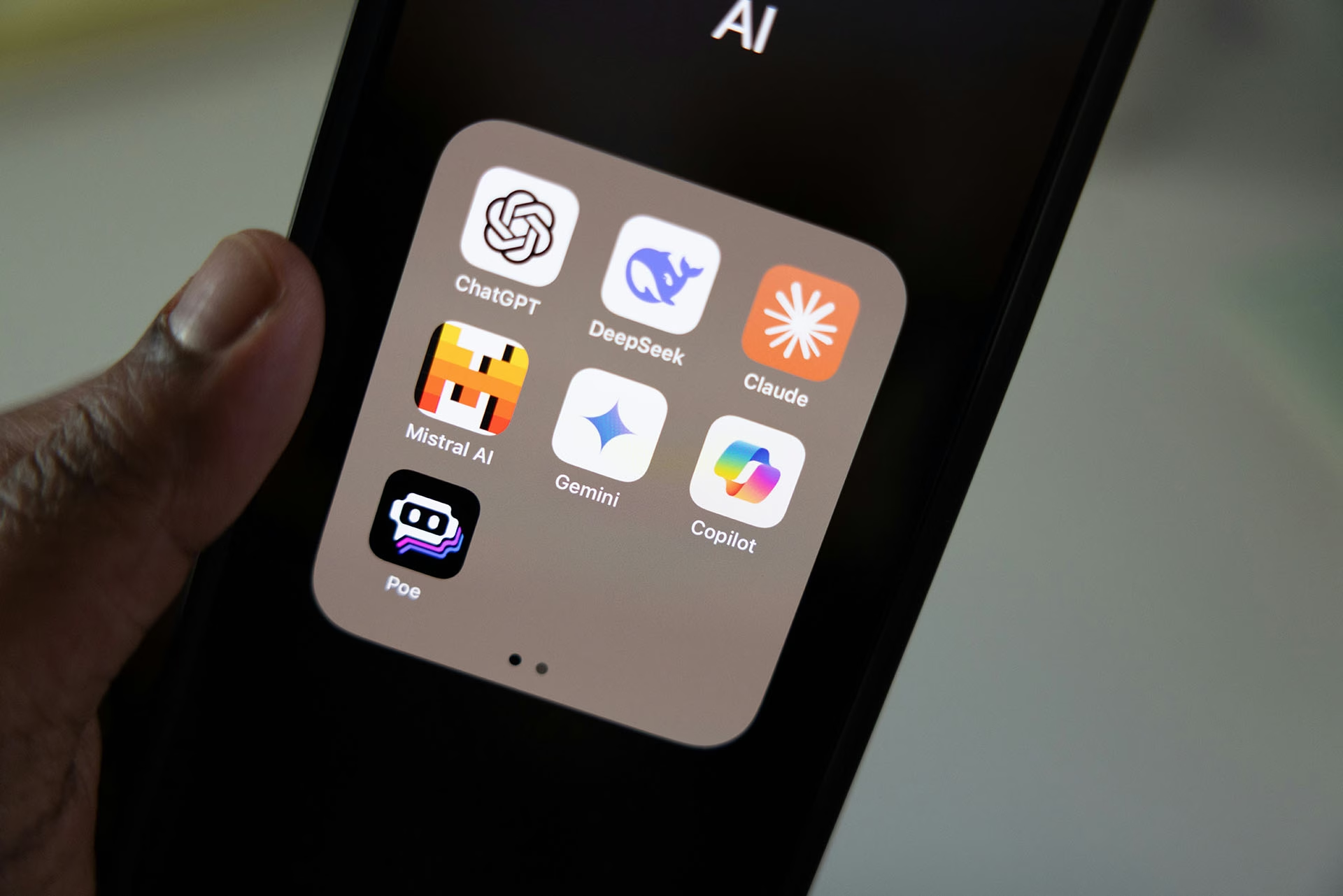
Here’s a number that should bother you: 0.05. That’s the average overlap between the sources Claude, ChatGPT, and Gemini cite when you ask them the exact same question. Not 50%. Not 15%. Effectively zero. I ran a controlled experiment — 15 standardized queries, 3 platforms, 3 interfaces (mobile, web, API), 135 total runs, 750+ citation events. Then I cross-referenced every frequently cited domain against its full SEO profile via Ahrefs’ API. To my knowledge, nobody had done this at the query level before. The aggregate studies (Profound’s 680M citations, Semrush’s 78.6M searches) told us overlap was low. The controlled version continue reading ->
Diego Lapetina • 2 minutes