Written by : Diego Lapetina
Read Time: 9 minutes
Two beauty brands launch the same lipstick. Same price point, same pigment quality, same Instagram aesthetic. One sells out in 72 hours. The other quietly discounts after 30 days.
The product is not the variable. The media universe surrounding it is.
This is the uncomfortable truth at the center of modern beauty marketing: consumers are not buying formulas. They are buying into editorial identities, cultural positions, and accumulated trust. When Fenty Beauty launched in 2017, it generated $72 million in earned media value within the first month. That was not a product launch. It was a media event that happened to include foundation.
Glossy media, as used here, does not mean high-production photography or a legacy print presence. It means a publishing philosophy: the deliberate construction of a media presence that makes products feel culturally inevitable rather than commercially motivated. It is an editorial ecosystem built from four components — voice, visual language, cadence, and cultural positioning — operating with the same intentionality as a magazine brand.
This guide covers the anatomy of that ecosystem, how media and product blur together in the most successful beauty brands, and what a practical entry point looks like at different scales.
What "Glossy Media" Actually Means (And Why Your Brand's Definition Is Probably Wrong)
Most beauty marketers treat editorial quality as a budget line item. Bigger budget, glossier output. This framing is wrong, and it is expensive to be wrong about it.
Glossy media is not a production standard. It is a strategic identity. One scales with spend. The other compounds with consistency.
Organic search drives 53% of all website traffic, making it the highest-performing marketing channel, according to BrightEdge research. Publishers like Allure, Byrdie, and Good Housekeeping dominate that channel not because they have larger photography budgets, but because they have built genuine editorial authority over time. That authority does not reset between campaigns.
Meanwhile, paid channel saturation has made digital ads less effective and more expensive. As McKinsey's State of Beauty 2025 report notes, "brand marketing can help rebalance the scales, but only if beauty players can be truly original". The brands that built editorial presence before paid reach became this costly are now sitting on a compounding asset. The brands that did not are re-buying the same audience attention every month.
The Architecture of a Glossy Media Identity
Brands know they want to "feel premium." Very few have a structural framework for building that feeling systematically. The four components below are the load-bearing elements of a glossy media identity. Each can be audited and improved independently, but they only create gravitational pull when they work together.
Editorial Voice: The Brand's Point of View, Not Its Product Catalog
Most beauty brands confuse brand voice with campaign taglines or product descriptions. The result is content that sounds like advertising, which readers scroll past without registering.
Editorial voice is a worldview, not a tone document. It is a consistent intellectual and cultural position that would be interesting even if no product existed.
Allure's editorial voice is that of a rigorous, science-literate beauty authority. It challenges trends, publishes ingredient breakdowns, and takes positions on what works and what does not. A reader trusts Allure's opinion before they trust its product recommendations. That sequence — trust first, recommendation second — is the entire model.
The test is simple: remove the brand name from your last ten content pieces. Would anyone seek them out? If the answer is no, the brand has product descriptions, not editorial voice.
Visual Language: The Glossy Grammar
Good photography is table stakes in 2025. Production tools have democratized to the point where visual quality alone communicates nothing. What differentiates a glossy media identity visually is not quality. It is coherence.
Visual language is the repeatable system of composition, color, texture, and subject positioning that makes every piece of content instantly attributable to the brand, even without a logo. Allure's identity uses a specific interplay of clinical whitespace and bold pigment closeups. Recognition precedes reading.
A moodboard is not visual language. A moodboard is a reference document. Visual language is a decision system applied consistently under production pressure, across formats, across team members, across years.
Content Cadence: Publishing Like a Media Brand, Not a Marketing Department
Beauty brands typically publish reactively — around launches, seasons, and trend cycles. This approach builds no independent audience. It trains consumers to pay attention only when something is for sale, which is the opposite of editorial authority.
Content cadence is a reader relationship. The goal is predictable, anticipated publishing that trains an audience to return independent of campaigns. And more content is not better cadence. Consistent, anticipated content beats high-volume random publishing. The platform algorithms reward it, but more importantly, human attention rewards it.
Cultural Positioning: What Your Brand Stands For in the Larger Conversation
Cultural positioning is the specific intersection of beauty and something else that the brand occupies with consistency and authority. Allure owns the intersection of beauty and science-backed truth. That is a structural position, not a trend response.
The brands that are cited rather than merely talked about have this kind of structural position. It is the difference between being part of a cultural moment and owning a corner of the cultural conversation permanently.
Media Products and Product Media: The Dual Role That Changes Everything
Most brands treat content and products as separate departments with separate budgets and separate KPIs. This siloed thinking leaves the most powerful synergy in brand publishing completely untapped.
The framework has two sides. Media products are content pieces designed to function as a product experience — editorials, lookbooks, video series valuable enough to stand alone. Product media is the inverse: products designed to generate and anchor their own media ecosystem at launch.
Media Products: When Content Is the Product
Allure's "Best of Beauty" franchise is the clearest example of a media product operating at full power. It is not simply an awards program. It generates its own earned media cycle, its own search traffic, its own consumer trust loop. Allure's Best of Beauty Awards drive measurable revenue for the brands they recognize. The content is the product.
The test: would a consumer seek this out if the brand name were removed? If yes, it is a media product. If no, it is marketing collateral in editorial clothing.
Product Media: When the Product Itself Is the Story
The opposite error is designing products for the shelf and then figuring out what to say about them afterward. Product media embeds narrative directly into the product — through packaging, naming, limited-edition storytelling — so the product becomes a media moment at launch rather than a SKU waiting for a campaign.
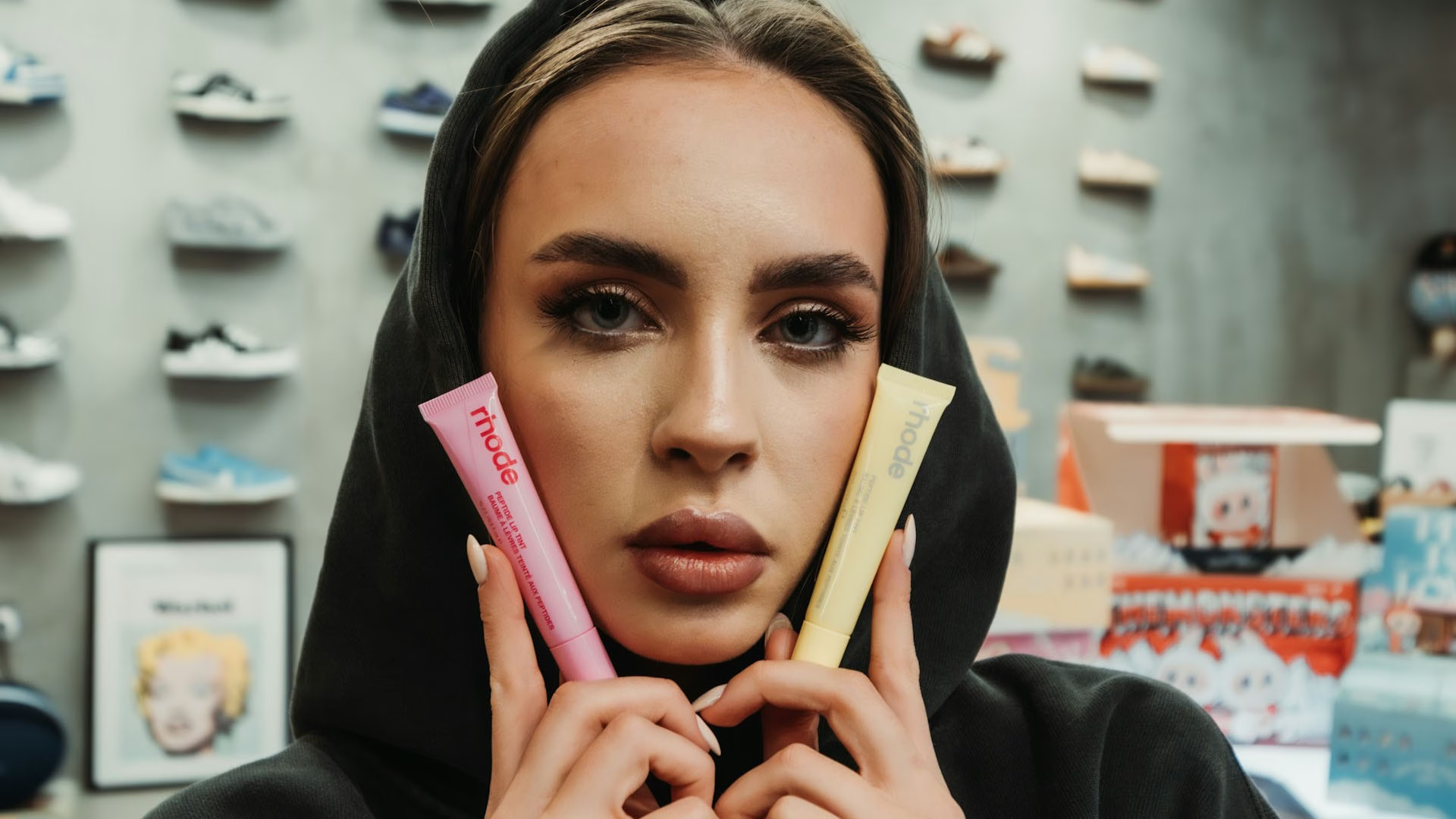
Rhode's pre-launch strategy is instructive. Before the brand officially launched, Hailey Bieber was already building audience through shared skincare routines and editorial-style content. When the Peptide Lip Treatment launched in June 2022, it sold out within three days and generated a waitlist of 440,000. The product launched into an existing media relationship. That is product media working as designed.
The Allure Brand and Media Presence: Anatomy of the Gold Standard
Allure reaches a large monthly audience of beauty enthusiasts. But the distribution number is not the point. The point is that brands want to be featured in Allure. That gravitational pull — where the media presence attracts rather than chases — is the goal of brand publishing.
The "Best of Beauty" franchise, running since 1996, demonstrates how a media product becomes a cultural institution. It functions simultaneously as editorial content, as a consumer trust mechanism, and as a revenue-generating platform for the brands it features. All four components of the glossy media framework are visible in it: editorial voice selects the winners, visual language presents them, annual cadence creates anticipation, and cultural positioning as beauty's most rigorous authority makes the seal meaningful.
The key structural insight: Allure's power is not its reach. It is that its editorial identity is so clearly defined that every piece of content is immediately recognizable as Allure, regardless of format or platform.
The Indie Blueprint: How the Model Scales Down
Smaller brands often assume the glossy media model requires legacy infrastructure or Condé Nast budgets. This assumption leads them to deprioritize editorial strategy entirely, which is the most expensive mistake they can make.
Glossier's origin story is the clearest counter-argument. Emily Weiss launched Into The Gloss in 2010 as a pure editorial platform — beauty interviews, ingredient discussions, cultural commentary. She built an audience with a clear editorial point of view, listened to what that audience wanted, and then launched Glossier into a community that already trusted her perspective. By the time products existed, there were built-in customers numbering in the millions.
The sequence matters. Content first. Editorial identity first. Products as the validation of an existing audience relationship.
Into The Gloss was a blog. What made it feel glossy was that every post came from the same intelligent, opinionated source. That principle scales: glossy is a mindset about editorial coherence, not a production budget threshold. For indie brands, the most visible starting point is editorial voice. It costs nothing except clarity of thinking, and it is the foundation everything else is built on.
How to Build Your Brand's Glossy Media Presence: A Practical Entry Point
Understanding the framework is not the same as knowing where to start. Three steps, in sequence.
Step 1: Define your editorial position. Identify the one cultural intersection your brand will occupy with consistency and authority. Not "beauty and wellness" — that is a category, not a position. Something specific: beauty and the science of skin barrier function, beauty and working-class identity, beauty and the chemistry of color. The more specific, the more ownable.
Step 2: Audit your existing content against the media product test. Pull your last 20 content pieces. Remove the brand name from each. Ask honestly: would anyone seek this out? The ones that pass are the seeds of your editorial identity. The ones that fail are product descriptions that need rethinking.
Step 3: Identify one recurring content format that can become a cadence anchor. Not a content calendar full of varied formats. One format, published on a predictable schedule, that trains your audience to return. The format matters less than the consistency.
Putting It All Together: Why Brand Publishing Is a System, Not a Strategy
Glossy media presence is not built from a single great campaign or a viral product launch. It is the accumulated result of four systems working in alignment: editorial voice, visual language, content cadence, and cultural positioning, all operating on both sides of the media and product divide.
The next 18 months will accelerate the collapse of the distinction between "media brand" and "product brand." As algorithm dependency increases the cost of paid reach, brands that have built genuine editorial authority will inherit the audience attention that paid-only brands will have to keep re-buying. BrightEdge's data showing organic search at 53% of all traffic is not a content marketing statistic. It is a structural argument for editorial investment.
But a note of honesty: editorial authority is necessary, not sufficient. Sunday Riley's fake review scandal demonstrated that editorial positioning collapses the moment authenticity is compromised. Youthforia's closure in 2025, following product execution failures that no amount of editorial positioning could offset, is the same lesson from a different angle. The media presence amplifies the product truth. It does not replace it.
Start with editorial voice. Define the cultural position. Then revisit the media products and product media framework with your product roadmap open. That is when the model becomes commercially actionable rather than conceptually interesting.
The handz team works with beauty brands at every stage of this process, from defining editorial position to building the operational infrastructure that makes consistent publishing possible. Reach out to start the conversation.
What you need to know:
▸What does 'glossy media' actually mean for a beauty brand?
▸What is editorial voice and how is it different from a brand's tone of voice?
▸What is the difference between media products and product media in beauty marketing?
▸How can indie or small beauty brands build a glossy media presence without a large budget?
▸Why is content cadence important for beauty brands, and what does it look like in practice?
▸What role does cultural positioning play in a beauty brand's media identity?
▸Is editorial authority enough on its own to drive beauty brand success?
Subscribe to our Newsletter.
Every couple of weeks, notes straight from the trenches — plus the keys to our growing library. Subscribe today and the Skincare Launch Playbook lands first.
Drop your email and enjoy.