
Read by Topics:


Design • July 8, 2026
Brand Strategy & Consulting: The Complete Guide to Building and Scaling a Strategic Brand
Brand strategy is the invisible architecture governing why positioning, messaging, and product decisions are made, not the visible execution customers see. A complete brand strategy system integrates messaging hierarchy, launch architecture, product extension logic, partnership evaluation, portfolio governance, and multi-site management. Academic research confirms that positioning coherence drives extension success, emotional associations create durable switching costs, and centralized brand governance measurably improves business performance. Brands without this architecture compete on aesthetics alone, which any competitor can replicate. continue reading ->
Diego Lapetina • 7 minutes
Design • July 3, 2026
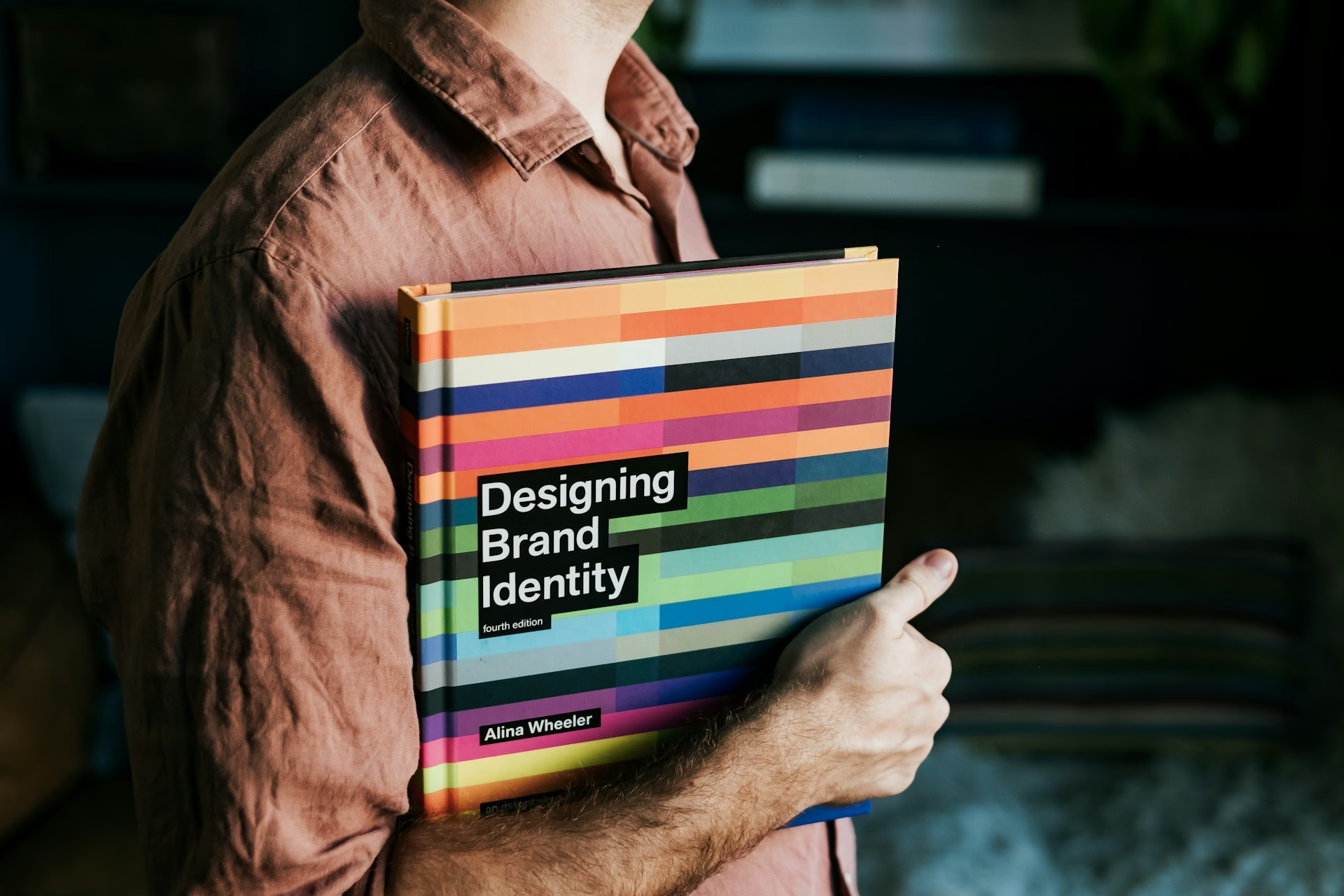
Branding and Identity: The Complete Guide to Building a Brand People Instantly Recognize
Brand identity is the complete system of signals a business sends into the world, encompassing visual design, voice, values, customer relationship, and legal protections. It differs from branding (the active process) and brand perception (what customers actually receive). The gap between intended identity and market image is where brand equity erodes. Frameworks like the Kapferer Brand Prism, consistent execution across channels, and trademark registration are the core tools for building a brand that commands premium pricing and lasting recognition. continue reading ->
Diego Lapetina • 7 minutes

Design • September 4, 2026
Glossy Media & Products: The Brand Publishing Guide Beauty Marketers Actually Need
Glossy media in beauty marketing is not a production standard but a publishing philosophy built from four compounding systems: editorial voice, visual language, content cadence, and cultural positioning. Brands that build genuine editorial authority generate audience trust that paid channels cannot replicate. The most successful beauty brands treat content and products as a unified media ecosystem, where content functions as a product and products launch into existing audience relationships. Editorial identity, not budget, is the foundational variable. continue reading ->
Diego Lapetina • 7 minutes

Design • June 30, 2026
Cognitive Branding vs Traditional Brand Strategy: Why the Industry Has Been Solving the Wrong Problem
Traditional brand strategy decides what a brand should say and look like. It does not predict how the brain will process those signals. Cognitive branding sits between strategy and execution, engineering schema, fluency, and decision context instead of measuring consistency and aesthetics. The evidence favors it: emotional, System 1 campaigns produce roughly 1.7 brand effects against 1.0 for rational ones. The winning brands run both layers, not one. continue reading ->
Diego Lapetina • 6 minutes

Design • June 29, 2026
Why Most Rebrands Fail: The Cognitive Error Behind Every Failed Rebrand
Most rebrands fail because they answer the wrong question. They ask how the brand should look instead of how the customer’s brain files it. Brand equity lives in memory, not in a guidelines PDF, so a process that never touches cognition cannot move a metric. Roughly 40 percent of rebrands deliver no positive return. The fix is to engineer schema, fluency, and decision context on purpose, not to produce a more beautiful logo. continue reading ->
Diego Lapetina • 5 minutes

Design • June 26, 2026
Behavioral Anchoring in Branding: How the Context of a Choice Decides It
Customers rarely evaluate a brand in isolation. The first price, the first frame, and the sequence of prior exposures set the reference point against which everything else is judged. Anchoring bias, loss aversion, and tiered pricing are not pricing tricks. They are the cognitive architecture of the decision. Brands that win the choice are usually the ones that engineered the context before the customer ever consciously compared options. continue reading ->
Diego Lapetina • 5 minutes