
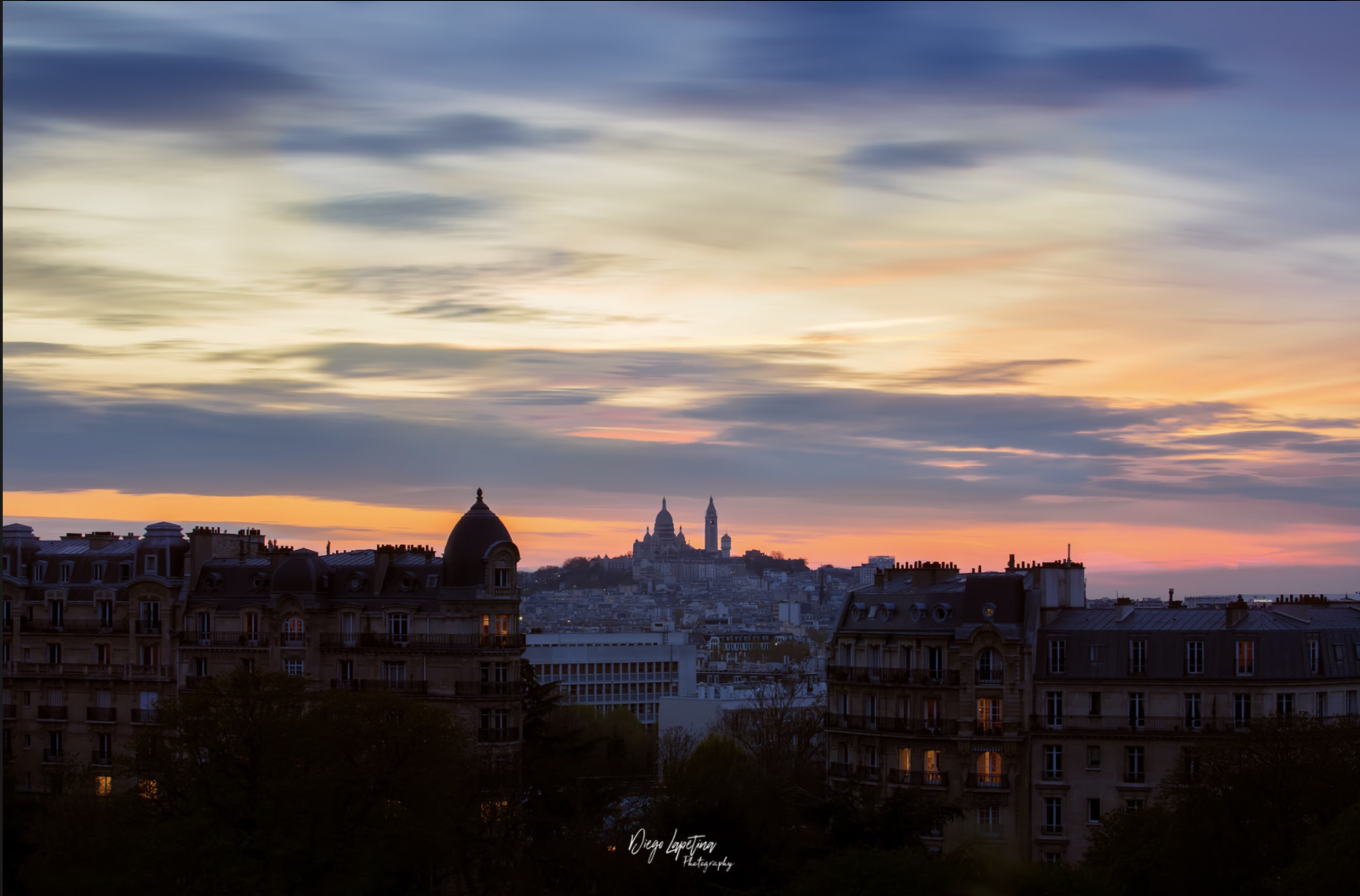
I was somewhere in the 15th arrondissement when I realized I had no idea where I was going.
This wasn’t my first time in Paris. The Louvre, the Eiffel Tower—I’d done all that. This afternoon, I wanted something different. So I got on the train with my camera and just… rode. No destination. No plan. Just the decision to get lost and see what happened.
I ended up at a local park I’d never heard of, watching the sunset bleed behind a clock tower. The light was perfect. The composition wrote itself. It became one of my favorite photographs from Paris—and I only got it because I had no intention of finding it. That’s the thing about magic. You can’t engineer it. You can only create the conditions where it might appear.
The Predictability Trap
The problem is that we live in a world obsessed with certainty. We need to know the route before we start walking. To see the ROI before we invest. We need to close every open loop, eliminate every variable, and guarantee the outcome before we commit. It’s human nature. Our brains hate ambiguity. We create stories to make sense of uncertainty, build plans to feel safe, and map out every turn to ensure we’re on the right path.
And it works. A predictable life is a safe life. But it’s also a life where magic can’t happen. A movie where you know the ending by minute 30 won’t hold your attention for 90 minutes. The same is true for life. When everything is predictable, prefabricated, and guaranteed—you’re watching a story you’ve already seen.
The Moment You Can’t Map
As John Lennon said, “Life is what happens to you while you’re busy making other plans.” The truth is, life doesn’t care what you plan. And that is a good thing. Because if life only gave us what we could imagine, we would be limited by our own expectations.
When my wife got pregnant, I couldn’t help but map it out. I imagined what our daughter would look like. How she’d behave. What it would feel like to meet her. Nothing I imagined came close. The first time I held her, I didn’t make a sound. But the tears came silently, without permission. There was a completeness to that moment that no amount of planning or visualization could have prepared me for. It wasn’t what I expected—it was infinitely better than anything I could have imagined. That’s what we lose when we demand certainty. We trade the possibility of the extraordinary for the guarantee of the adequate.
Not an Apology for Chaos
And let’s be clear—this isn’t an apology for chaos. My flight to Paris was booked. My shelter was guaranteed. I made sure I had the means to raise my daughter before she arrived. Structure isn’t the enemy.
But if we insist on living a predicted, prefab life, we strip it of its pulse. We waste the magic. We miss the moments when the clouds break, the rainbow appears, and your daughter sees it for the very first time. That magic is reserved for the people who know where they want to arrive, but have the courage not to rush the getting there.