
Read by Topics:


Trends & Insights • August 3, 2026
Cosmetics Terminology Decoded: What Benefit, Ilia, and Merit Beauty Teach You About Building a Brand
Cosmetics terminology blends four distinct language layers: regulated claims, ingredient claims, finish descriptors, and brand philosophy. For a founder, each layer is a strategic lever with its own payoff and its own liability. Benefit turns proprietary language into ownable IP. Ilia stacks philosophy-heavy claims like “skin-forward” and “biome-friendly” on top of real ingredient commitments, buying fast growth at the cost of higher exposure. Merit makes fewer, more defensible claims and turns minimalism into a moat. Deciding which layer your brand anchors in — and what each obligates you to defend — is one of the highest-leverage positioning choices you make. continue reading ->
Annie Graham • 8 minutes
Cosmetics • July 2, 2026
Silica, Silica Silylate, and Silicone Compounds: Stop Using Them Interchangeably
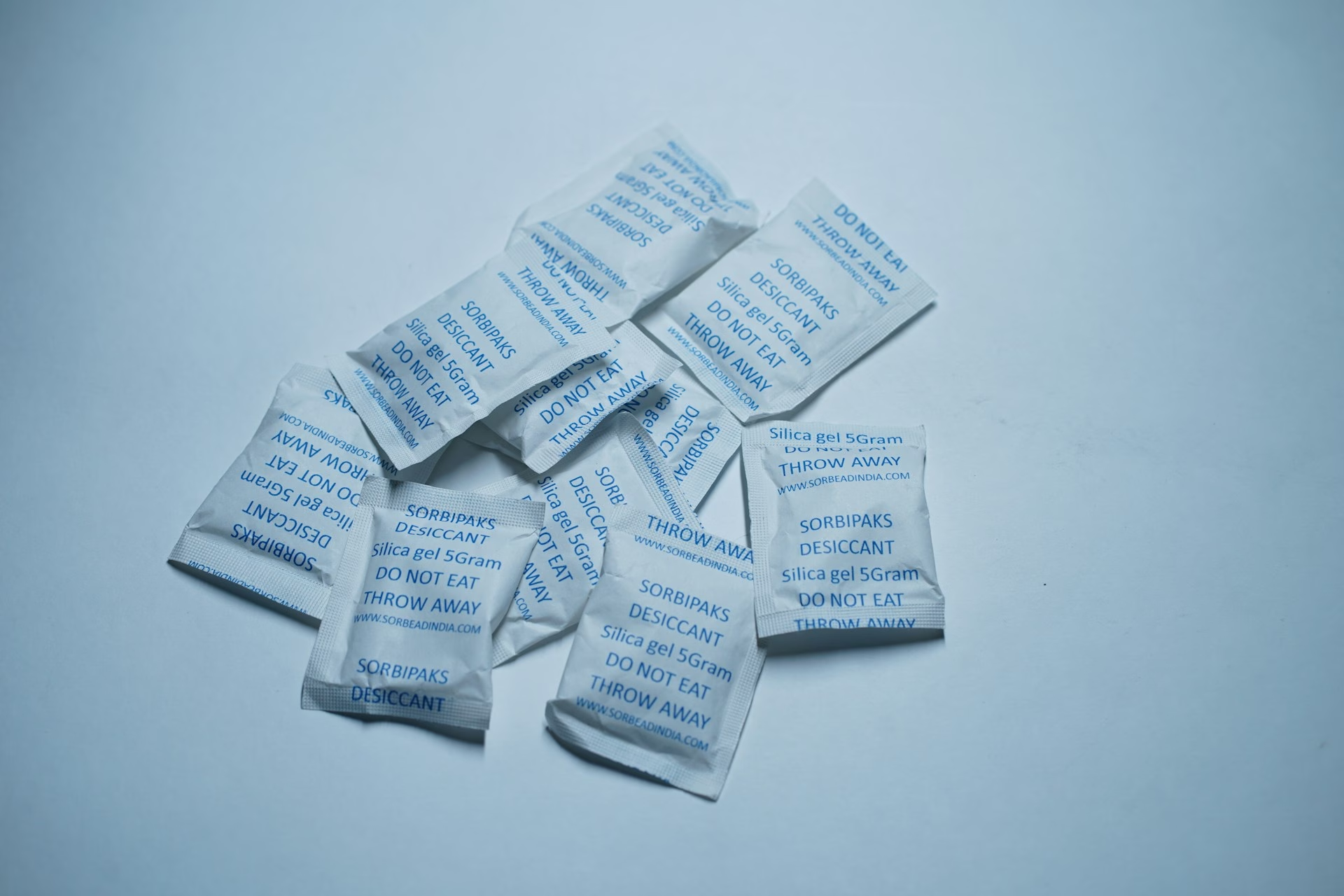
Silica, silica silylate, and silicone compounds are three distinct ingredient categories that share a silicon origin but perform entirely different functions in cosmetic formulas. Silica is a mineral particle that absorbs oil and builds physical texture. Silica silylate is surface-modified silica that operates in hydrophobic and anhydrous systems. Silicone compounds are synthetic polymers that modify skin feel through slip, film formation, and emolliency. Treating them as interchangeable causes formulation failures, texture defects, and wasted raw material costs. continue reading ->
Annie Graham • 6 minutes

Cosmetics • May 6, 2026
The Invisible Ingredient: Why Your Brand Needs a Fragrance Identity
Fragrance at sub-threshold or near-threshold concentrations in a well-formulated skincare product is not a safety compromise — it’s a neurological brand asset. Smell bypasses the thalamus and reaches the brain’s emotion and memory centers directly, meaning fragrance encodes brand association even when customers cannot consciously detect it. Used at IFRA-compliant micro levels (typically 0.1–0.3% in leave-on products), an olfactory signature does for scent what a logo does for sight: it turns a product into a brand. Key takeaways What clean beauty gets wrong about fragrance in skincare Most people think of fragrance in skincare as a luxury, or worse, a continue reading ->
Annie Graham • 5 minutes

Cosmetics • May 6, 2026
How Skincare Products Actually Get Made: Why Formulation and Manufacturing Are Two Different Chapters
Building a skincare product is not one process. It is two — formulation development and manufacturing. Treating them as a single step is the most common reason emerging brands launch products that look right, but fail in the market. Formulation is where your brand’s core asset is engineered. Manufacturing is where that asset gets executed at scale. Understanding why these are separate, and why we deliberately structure them that way, is the difference between a product that holds its own and one that quietly disappears. Key takeaways Chapter One: Custom skincare formulation is where your brand actually begins Before there continue reading ->
Annie Graham • 5 minutes

Cosmetics • August 3, 2026
Why the Traditional Cosmetic Lab Model Is Broken
Most beauty brands don’t fail because of marketing. They fail because the product was never strong enough to begin with. In today’s industry, founders are told they can build a brand with the right aesthetic, a compelling story, and a few good suppliers. But what’s often overlooked is the complexity behind the product itself. The formulation, the manufacturing pathway, the regulatory framework, and how all of these elements interact. From the outside, launching a beauty product can appear straightforward. In reality, it is anything but. The Illusion of Simplicity Most founders enter the beauty space with a clear vision. They continue reading ->
Annie Graham • 5 minutes

Cosmetics • May 6, 2026
Can You Believe in Science and Still Read Your Horoscope?
Can scientists believe in astrology? This article explores the relationship between science and astrology, separating mechanism from metaphor and examining how analytical minds can engage symbolic systems without abandoning evidence-based thinking. continue reading ->
Annie Graham • 2 minutes